Geotextile stabilization for US 1 bypass
The US 1 Bypass - Geotextile project took place in Toombs County, GA as part of roadway construction work that required a stable base to keep the job moving. Moses Grass Company worked alongside McLendon Enterprises to install stabilization fabric on prepared grade before the next materials went down. This phase stayed focused on the part of the roadway that had to be right first: a clean separation layer that supported an orderly build-up of the base section.
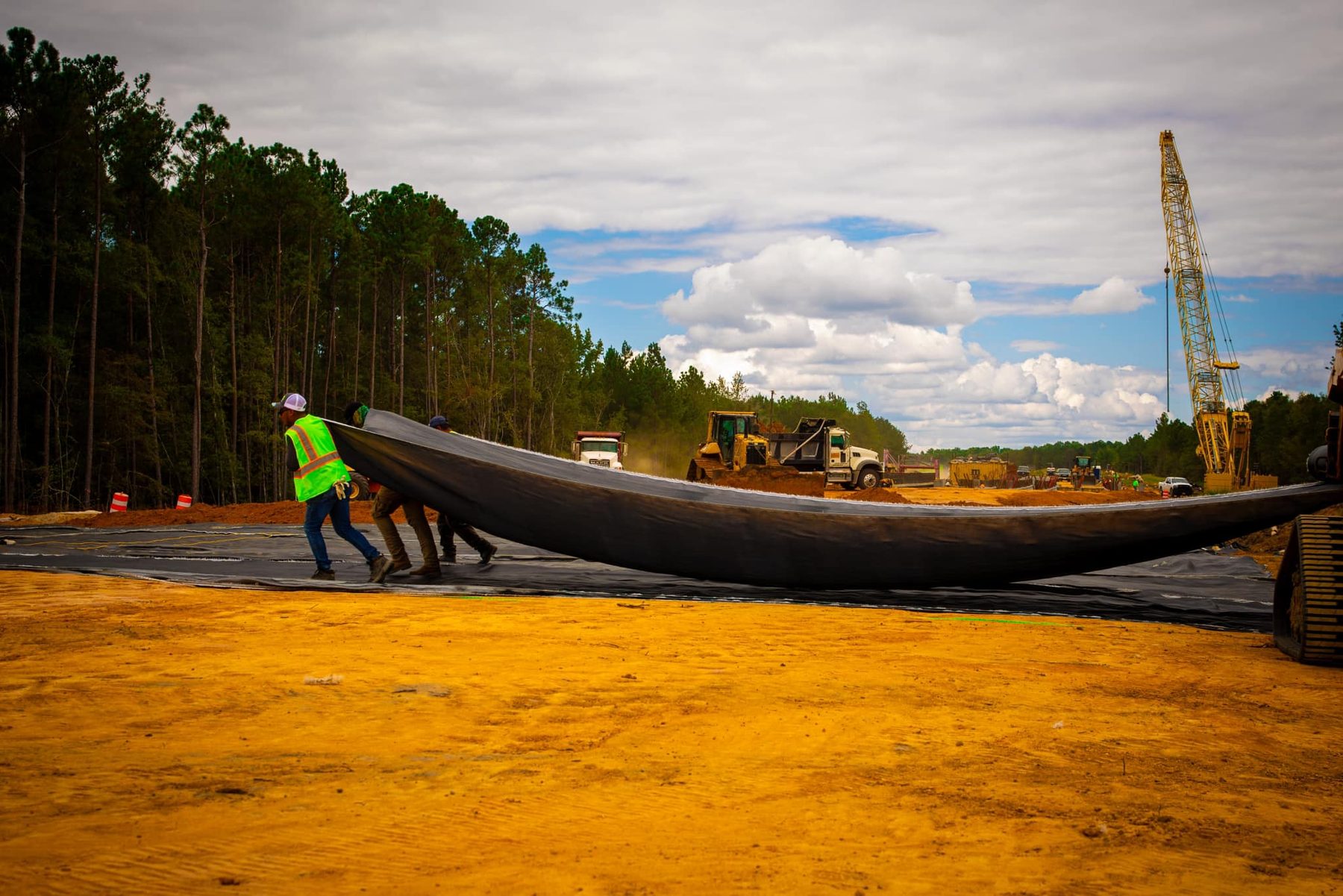
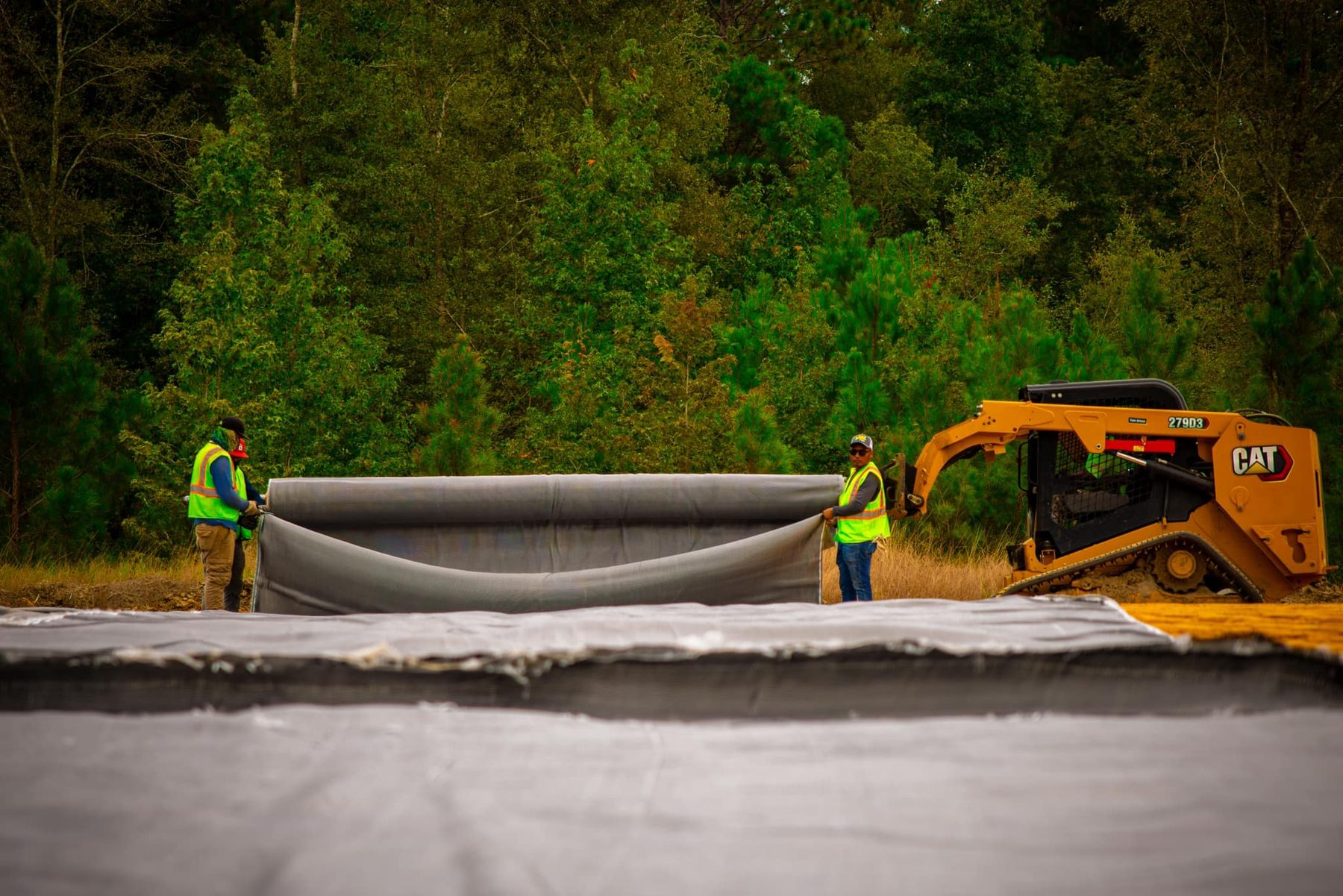
Geotextile stabilization on this bypass followed a steady, repeatable rhythm in the field. Crews rolled out geotextile fabric in wide runs across the roadway footprint, keeping the fabric aligned and tight to the surface so it laid flat and consistent. Sections were connected by sewing the adjoining edges, which helped the fabric work as one continuous system instead of a patchwork of individual pieces. That continuity mattered on a corridor where equipment traffic and material placement followed closely behind the installation.
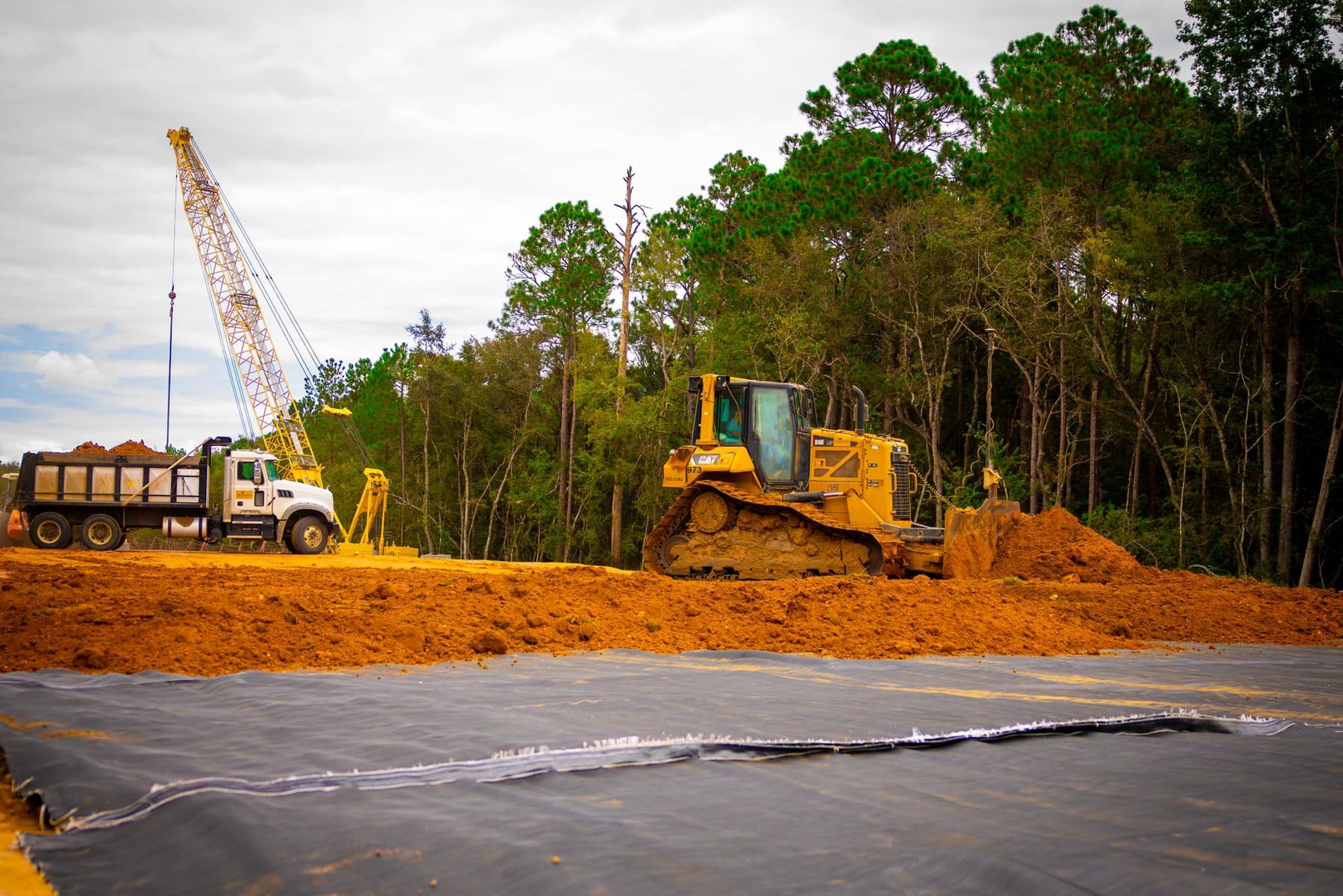
Our service on this project was Stabilization Fabric installation. The work was part of base preparation, with the fabric acting as a separation layer between the subgrade and the material placed above it. Once the fabric was set and connected, it was covered promptly to protect it and to create a working surface for the next steps of construction. McLendon Enterprises placed clay cover using dumps to deliver material and dozers to spread and shape it, keeping the sequence moving from fabric installation to covered base without long gaps.
The job depended on doing the basics well and doing them in the right order. Fabric went down on the prepared grade first, then cover material followed right behind, building a base that could accept the next lift. After the clay cover, the section moved toward rock gravel placement, with asphalt planned later as the top layer of the highway. Keeping the installation clean and the transitions tight helped the overall process stay organized from one stretch of roadway to the next.
This phase worked best when crews stayed in step. Moses Grass focused on keeping fabric placement straight, connected, and ready for cover, while McLendon Enterprises managed the earthwork and material placement that followed. The handoff had to be clean: once a run of fabric was installed and sewn, cover placement moved in to protect the fabric and build the working base. That close sequencing reduced exposure of the fabric and kept the foundation work consistent across the job.
By the end of our portion of the work, the stabilization fabric had been installed and tied together in continuous runs, and the clay cover had followed in a timely manner to build up the base. The area was left ready for the next phases of the roadway section, including rock gravel placement and the later asphalt layer. The project reflected the kind of practical field execution that supported larger roadway schedules and helped keep construction moving in Toombs County as part of Growing Georgia.