Sod is used when a project needs ground cover right away and waiting on germination isn't realistic. In roadway and site work, that often shows up on slopes where water will move before seed can establish, along traffic edges where sediment tracking is a real concern, or when the schedule and forecast don't leave much margin. We approach sod as a working part of the erosion-control plan. The purpose is straightforward: protect the soil, slow surface flow, and leave a stable cover that can stand up to inspection and day-to-day Georgia weather.
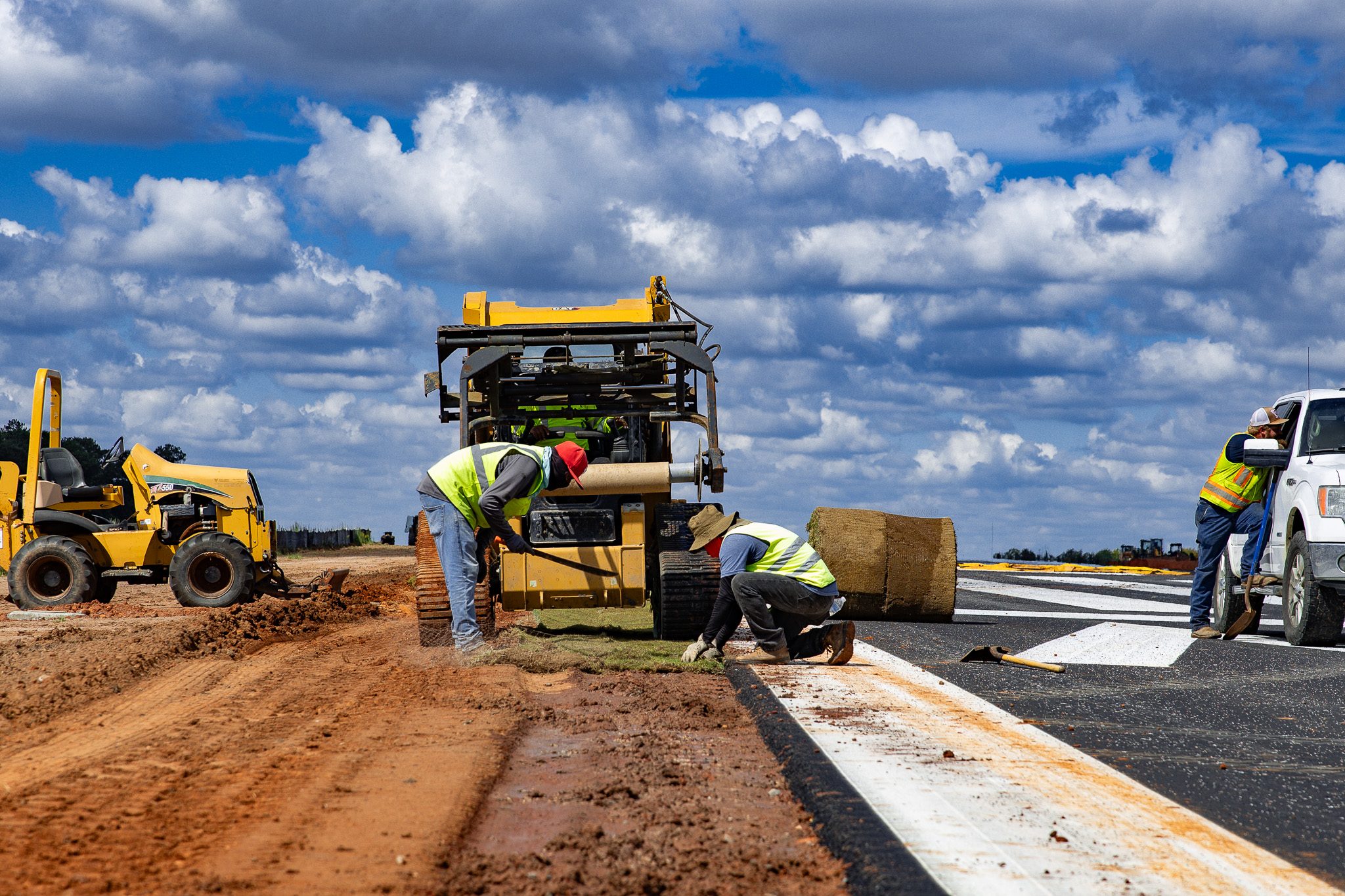
Good sod starts with prep. Before installation, the focus is on shaping and fine grading so drainage goes where it is intended and water does not pond under the turf. We watch for soft spots, pumping subgrade, and areas that are too tight from compaction. If soil is sealed and slick, roots have trouble knitting in. If the base is unstable, sod can slide, seams can separate, and the surface can rut under foot or equipment traffic. Addressing grade and soil contact early helps keep the finished area from turning into a patchwork repair after the first hard rain.
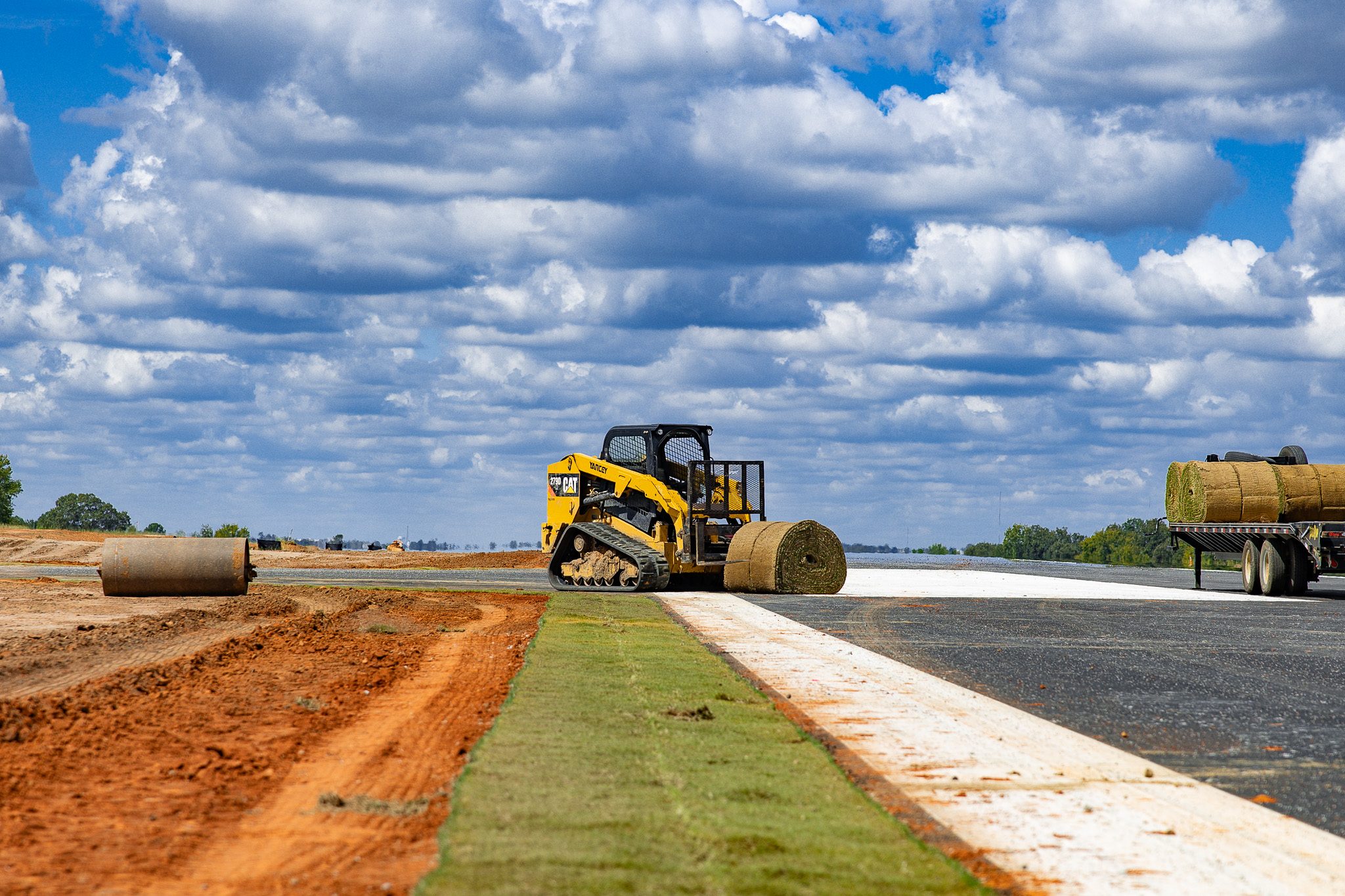
Sod performance depends on how it ties into the rest of the system. That includes clean transitions at ditches, swales, curb lines, and other conveyance features, plus coordination with adjacent best management practices (BMPs). Where sod meets seed and mulch, erosion-control matting, riprap, inlet protection, or silt fence, stable edges and consistent transitions matter. Field details like tight seams, consistent thickness, clean trimming around structures, and rolling or pressing for full contact help the sod act like a continuous surface instead of a series of weak points.
Because it provides immediate cover, sod is often selected where erosion risk is higher or where the finished line needs to be predictable. Runoff tends to show problems first at tie-ins and around concentrated flow, so those areas get special attention. On GDOT-style work, sod is frequently used in high-visibility locations to reduce rework risk and stabilize areas that are hard to keep protected with temporary cover alone.
Establishment is where expectations can get missed, so it needs to be understood up front. Timing matters because temperature swings, day length, and forecasted rain all affect rooting. Sod placed during extreme heat or cold needs realistic protection and watering plans. Most installs require consistent moisture in the first few weeks so roots can knit into the soil; too little water slows rooting, while too much can soften the subgrade and allow seams to shift. Maintenance responsibility and access to water also matter, especially on long corridors or remote stretches where watering logistics affect cost and schedule. Slope, access, staging space, and weather windows can change how the work is sequenced so the site stays protected as conditions shift.