Stabilization fabric is used when a project needs a dependable stone surface over soft, wet, or changing soils. The main purpose is separation: keeping aggregate from pushing down into the subgrade so the stone section can hold its intended thickness. This matters on sites with clay that holds water, mixed fill, or areas that start "pumping" once trucks and equipment begin moving.
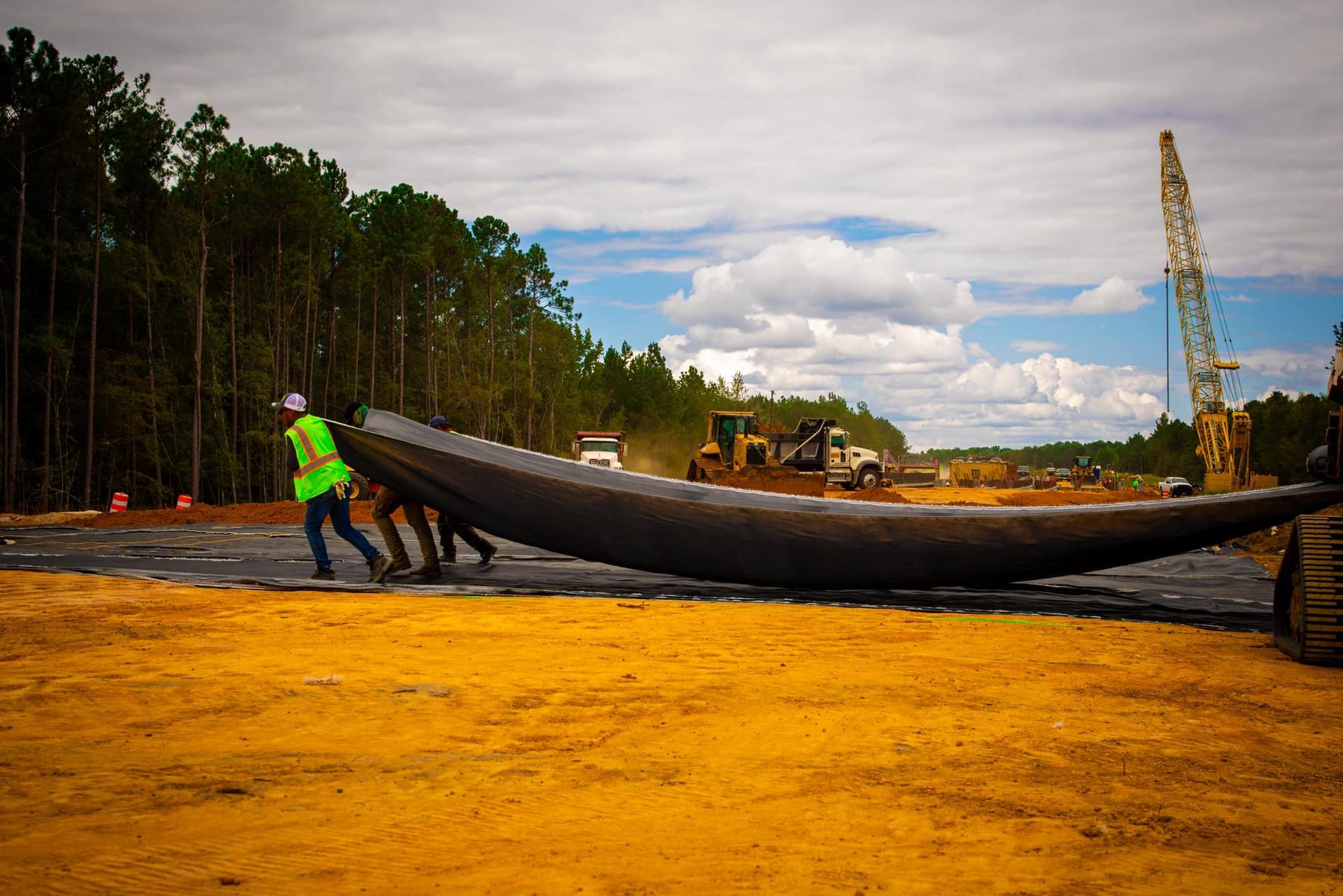
With the fabric in place and covered properly, ruts typically develop slower and crews have a more predictable working platform for haul traffic and follow-on work like paving or concrete operations. Fabric does not fix unsuitable soils by itself, so the stone section and drainage approach still have to match the jobsite conditions.
Performance starts with what's under the fabric. We grade the subgrade to an even plane, remove roots and debris, and look for soft pockets, wet seams, and transitions where soil types change. Those locations may require undercut, stabilization, or a thicker aggregate section to meet the project's intent. Fabric needs consistent support; if it bridges sharp humps, stumps, or rock, it can tear once stone and traffic load the section.
Once the subgrade is ready, fabric is placed in a controlled layout that matches access and the direction of travel, with straight seams that stay protected. Wind and site traffic can move fabric quickly, so anchoring and staging matter, but the best protection is timely stone cover. We avoid running equipment directly on exposed fabric and focus on placing and spreading aggregate soon after installation to limit shifting, UV exposure, and storm risk.
Fabric helps keep fines in the soil and rock where they belong, but water still has to be managed. We coordinate with temporary diversion, sediment barriers, inlet protection, and outlet stability measures shown in the plans so runoff doesn't concentrate and cut along an edge, undermine the section, or carry sediment off site. Where slopes or discharge points are involved, we pay close attention to how the stone surface ties into existing grades and how runoff leaves the area without creating a new issue downstream.
After installation, the fabric itself does not "establish" like vegetation, but the aggregate surface built over it needs routine attention to stay functional. Heavy traffic, tight turning, and persistently wet subgrade can require periodic dressing, added stone, and regrading to maintain a smooth running surface and positive drainage. After storm events, edges and low spots should be checked, and any exposed fabric should be covered promptly to prevent tearing and UV degradation. Final scope, timing, and maintenance needs are typically confirmed in the field based on soils, access, slope, drainage, and weather.