Concrete revetment, also called fabric-formed concrete, is used to protect channels, slopes, and drainage features where runoff has enough energy to erode the grade. It is often selected when a traditional form-and-pour approach would create access, traffic, or schedule complications. The intent is straightforward: install a uniform protective layer that follows the designed line and grade, sheds water in a controlled way, and reduces the chance of repeat washouts. On GDOT and local roadway projects, it commonly shows up at outfalls, ditches, median drains, and slope repairs that need hard protection while still fitting around existing structures and maintenance limits.
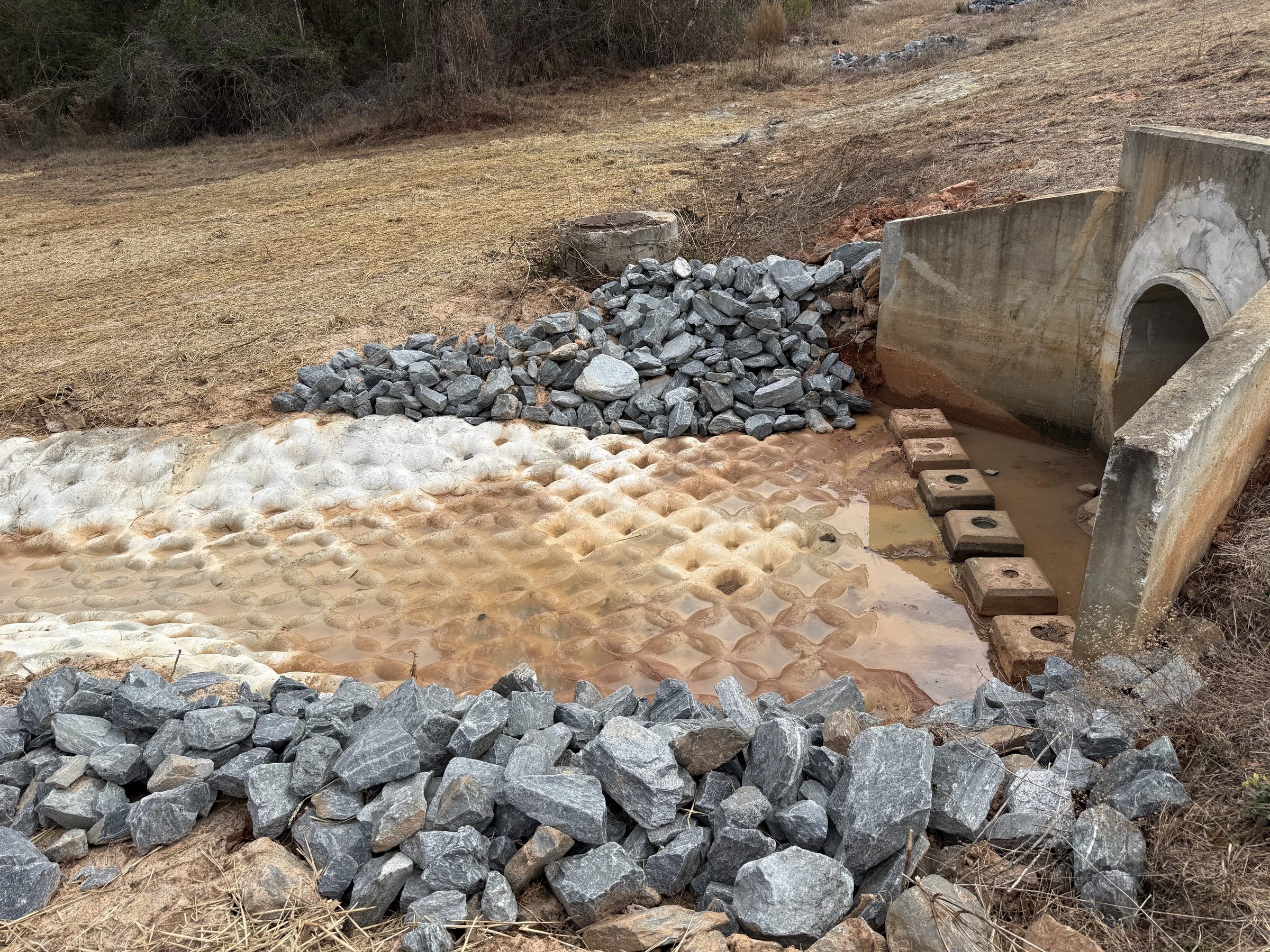
Good revetment work starts with layout and grading. Before the first fabric panel is unrolled, we confirm limits, elevations, and tie-in points, then focus on building a stable, drainable base. Because the system conforms to the surface beneath it, the finish and performance are only as good as the subgrade. If the ground is rutted, loose, saturated, or showing seepage, those conditions can telegraph through the mat and lead to settlement or undermining after the first storm events. Depending on plans and field conditions, prep may include stripping unsuitable material, shaping and compacting grade, trimming grade breaks, and building toe keys or transitions that keep water from sneaking under edges.
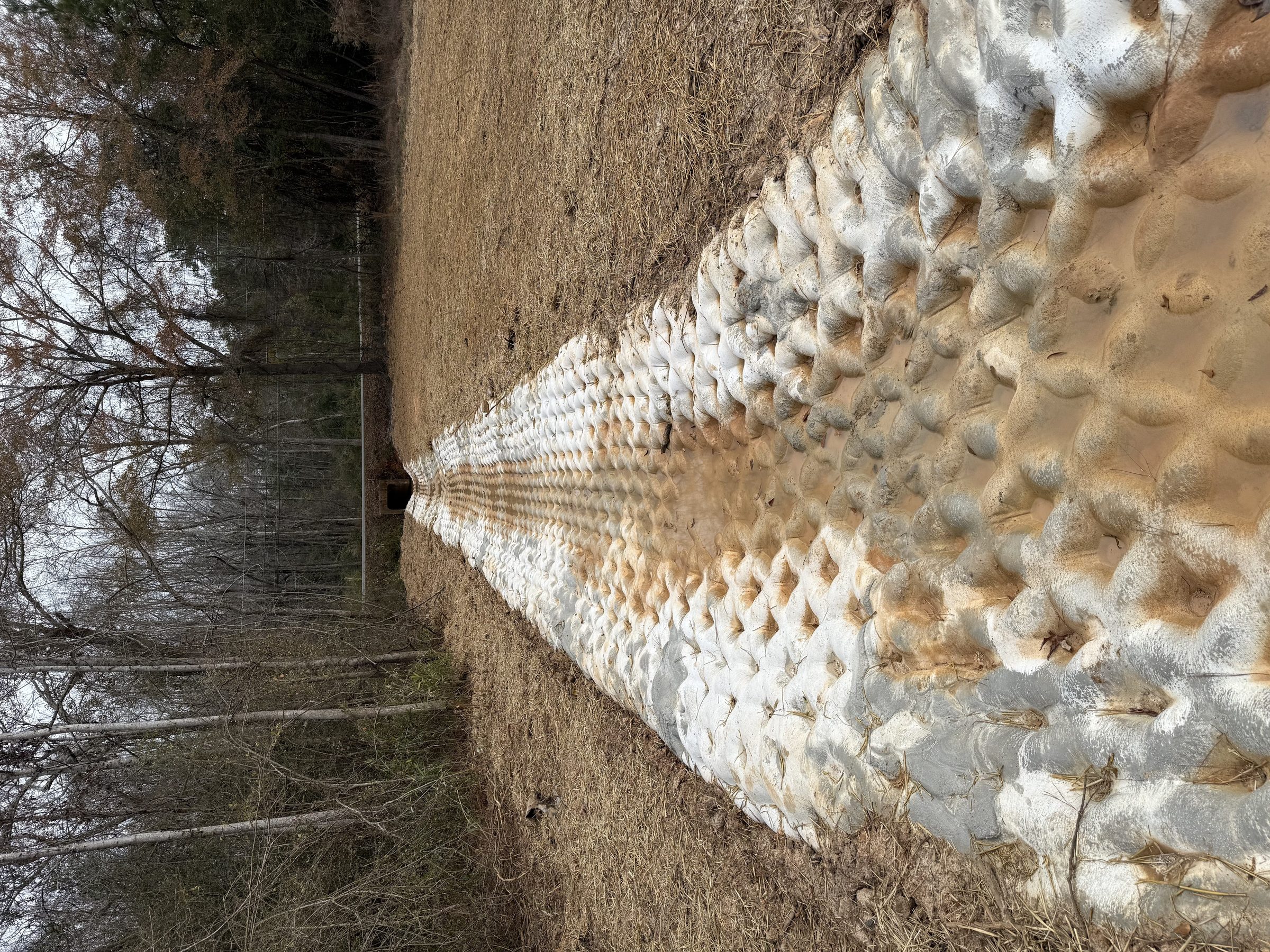
We also plan erosion-control coverage during construction so the work does not create a clean, fast surface that pushes sediment downstream. That means protecting adjacent inlets and outlets, containing disturbed areas, and sequencing work so the site stays stable between phases-especially when installation is near active drainage.
Once the grade is right, fabric units are placed and secured to match the intended alignment and drainage path. The units are then filled with a controlled concrete mix under steady pressure so the mat fills evenly and seats tight to the subgrade. Edges, overlaps, and transitions are where problems often start, so time is spent on anchoring, trimming, and tying into existing structures and aprons. Timing matters as much as technique: forecast and temperature affect cure conditions, runoff risk, and access on Georgia jobsites. Where inspections or hold points apply, coordination helps keep corrections workable and helps the final surface drain the way it was designed.
Concrete revetment is typically lower maintenance than bare soil, but it still has expectations around the first significant rain events. Early checks focus on debris buildup at edges and outlets, signs of water getting behind the mat, and any undermining at the toe or at tie-ins to existing features. When adjacent seeding, sod, or other stabilization is part of the project, sequencing matters so vegetation can establish without being scoured by construction runoff or the first storm after demobilization. A practical closeout includes confirming edges, transitions, and drainage paths are still performing as intended.