Striping may land late in the sequence, but it sets lane guidance as soon as traffic is back on the pavement. Our crews approach it like a safety task first. Before we mobilize, we confirm the approved layout, phasing, and traffic-control expectations with the prime and inspector, then verify what the pavement is doing in the field. That includes surface texture, milling marks, joints, curing compounds, and any oil, dust, or moisture that can keep markings from bonding.
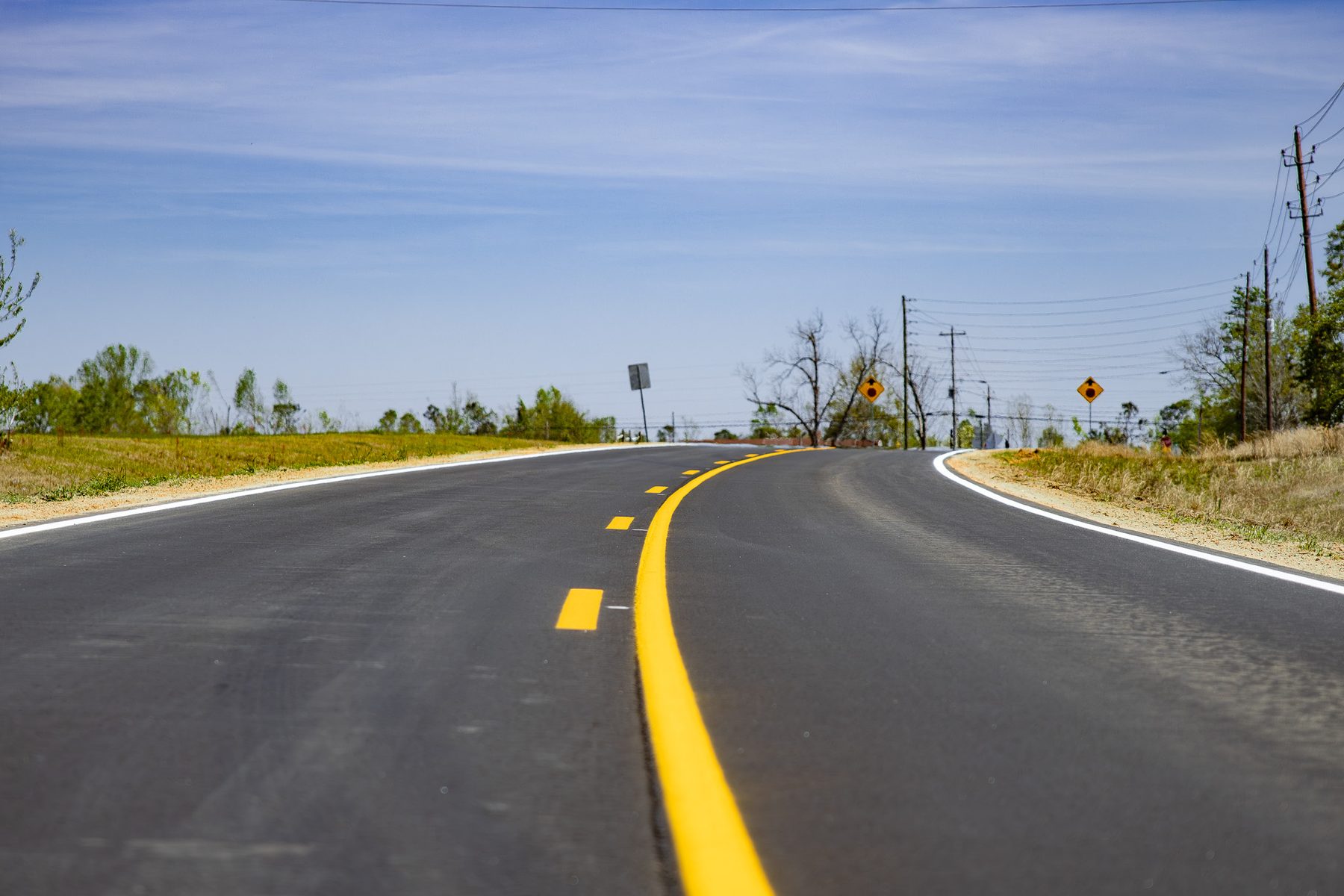
Good striping starts with a clean, dry surface. We sweep and clean with the goal of removing material tires will grind into fresh markings on day one-dust, sand, and residue that can reduce adhesion and reflectivity. On corridor work tied to grading, shoulder building, or erosion-control installation, we also pay attention to soil conditions near the travel way. Mud tracked from unpaved access, windblown fines from disturbed areas, or loose shoulder material can contaminate the line path fast and shorten service life. When that shows up, we focus on the source, clean thoroughly, and stripe when the surface is ready.
Layout matters as much as surface prep. We set and check reference points so lines track correctly through curves, tapers, intersections, and transitions. We verify widths, offsets, skip patterns, and symbol placement against plan sheets and applicable GDOT or local notes without guessing in the field. Material selection is driven by intent-paint versus thermoplastic, durability needs, posted speed, turning movements, and whether the project is opening to traffic long term or moving through phased construction where markings may be temporary. Bead application and embedment are treated as part of the marking system because nighttime visibility depends on it.
During application, we balance progress with safety and real traffic movement. Traffic control is set to match the work-zone limits, sight distance, and the operation-continuous lines, symbols, or intersections where turning traffic can damage uncured material quickly. Weather and surface temperature drive decisions in real time; humidity, dew point, and rain risk all affect adhesion and cure. We also coordinate around erosion-control measures so striping work does not create a new downstream issue: we avoid overspray near drains and waterways, keep inlet protection functioning, and watch for sediment or loose material migrating back onto the pavement after sweeping.
After placement, we can walk the work with the prime and inspector to confirm the field basics that matter: alignment, line width and gaps, bead presence, clean edges, and areas needing touch-up due to tracking, turning traffic, or late-stage construction activity. We also set straightforward expectations for service life based on what we see on site-traffic volumes, surface texture, braking and turning locations, and maintenance activities like sweeping that can accelerate wear. On phased jobs, we help plan removals, re-stripes, and transitions so lane guidance stays clear through each shift.